Guides
Nail salon equipment: what to weigh for each station and procedure
A practical look at nail salon equipment decisions by station and procedure, from source capture and curing lamps to pedicure basins and implement rotation.
What to take away
- Buy the station, not the shopping list. Every purchase either shortens turnaround, protects the air a technician breathes, or makes a required procedure possible.
- Implement sets are bought in multiples. With one per technician, a contact time longer than the gap between clients cannot be honored.
- Air is captured at the table or it is not captured. A room unit treats the room average, not the point where the dust is made.
- Lamps are chosen by the gel systems in use. A mismatched lamp produces service breakdown that looks like a technique fault.
- What the equipment has to make possible is set by your state board of cosmetology, not by a supplier.
Start from the procedures, not the catalog
Write down the procedures the salon performs, then buy what makes each possible; four drive most equipment decisions.
Deliver a service at a station with the right light, air, and consumables in reach, and reset a station between clients in the gap the calendar allows. Disinfect implements for a labeled contact time while other clients are served. Clean pedicure equipment between clients and again at close.
Anything serving none of the four can wait. What those procedures have to contain comes from the licensing and compliance guide, which a state board sets.
The manicure station
The table is chosen for its air, not its surface. Source capture means an intake at the working surface, built into the table or on a portable unit whose nozzle sits where the filing happens. A room air cleaner in the corner treats air that has already passed the technician.
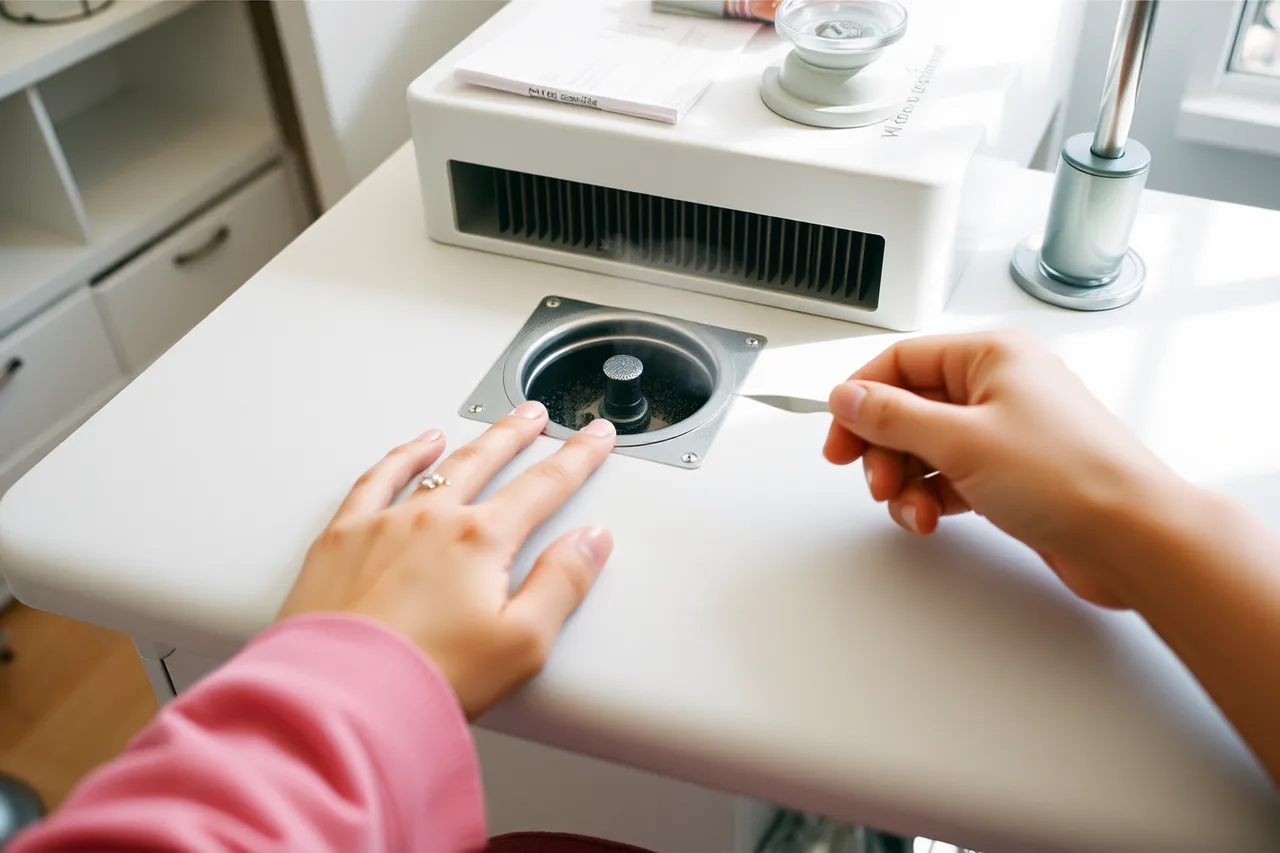
Filters are consumed by run hours rather than calendar months, so a heavy acrylic menu exhausts them faster. And a particulate stage does nothing for vapor.
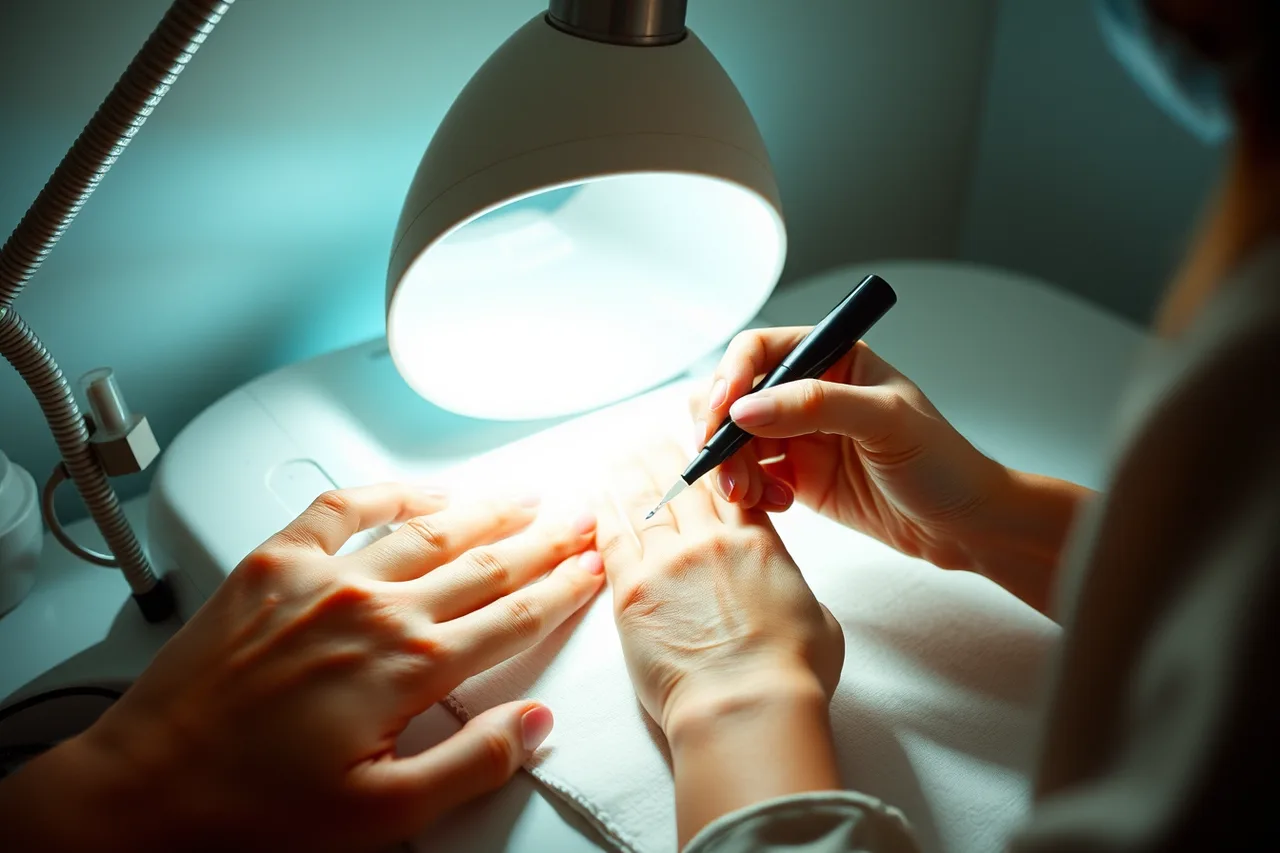
Task lighting comes next: even and color-accurate at the nail, with no shadow from the technician's own hands. Poor light produces uneven application that only shows in daylight, after the client leaves.
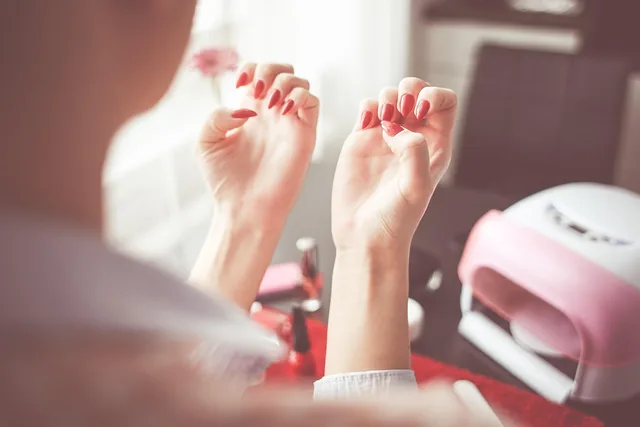
The curing lamp is separate and not interchangeable. Manufacturers specify which lamp cures which gel and for how long. A gel paired with the wrong lamp, or with a lamp whose output has aged, under-cures. Buy lamps to match the menu and record which pairs with which.
Seating is the item owners under-buy and technicians pay for. The technician's chair matters more: it is occupied all shift.
The pedicure area
Piped whirlpool systems circulate water through internal lines that cannot be inspected. Pipeless systems move water with an impeller that comes out as a part, so it can be cleaned and then seen to be clean.
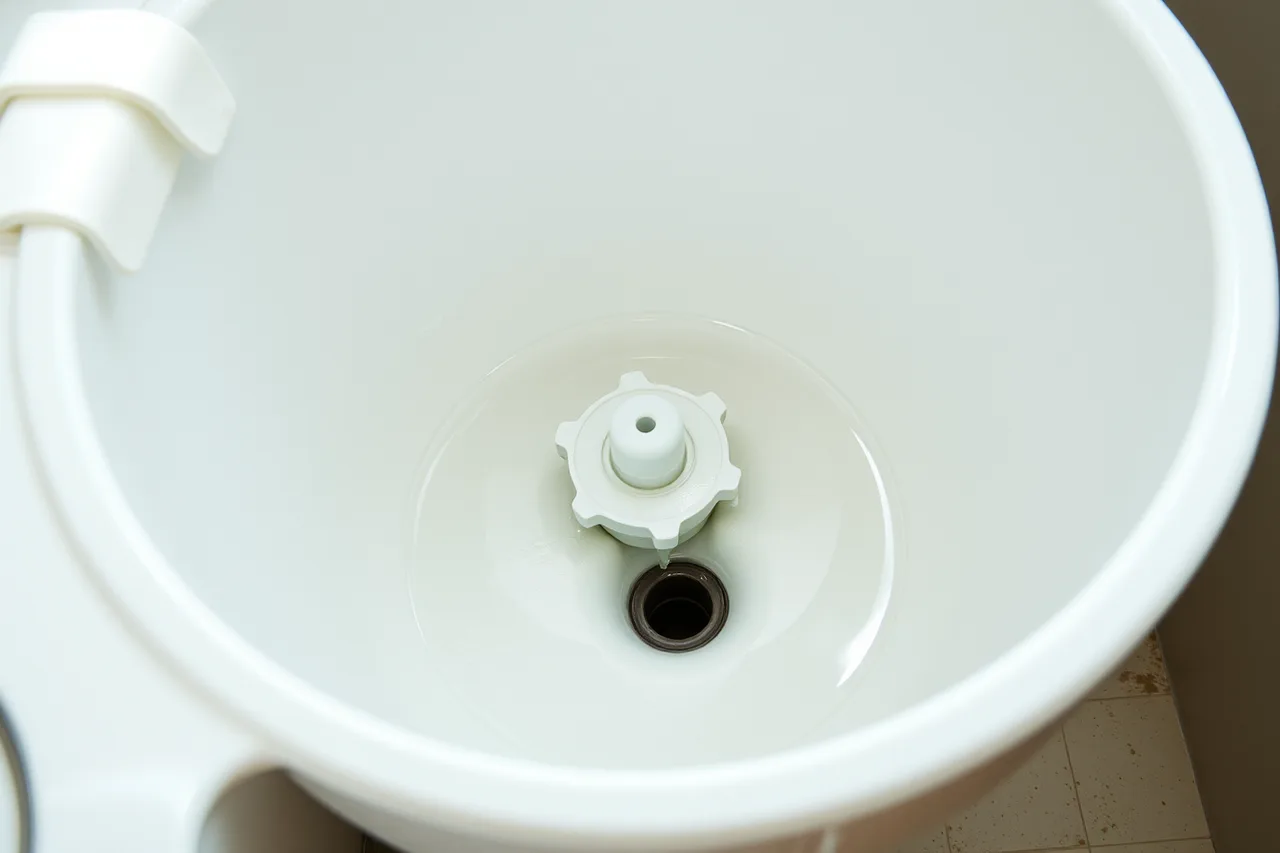
The between-client procedure is the same either way. Drain, remove debris, clean with detergent, then disinfect for the full labeled contact time before draining again. Registration and contact time can be checked against the EPA list of registered antimicrobial products. Disposable liners do not remove the basin procedure in most states; ask your board rather than a liner supplier.
Plumbing and drainage can attract a local sign-off unrelated to the cosmetology board. Confirm it before a unit is fixed in place.
Implements, and why multiples are the real specification
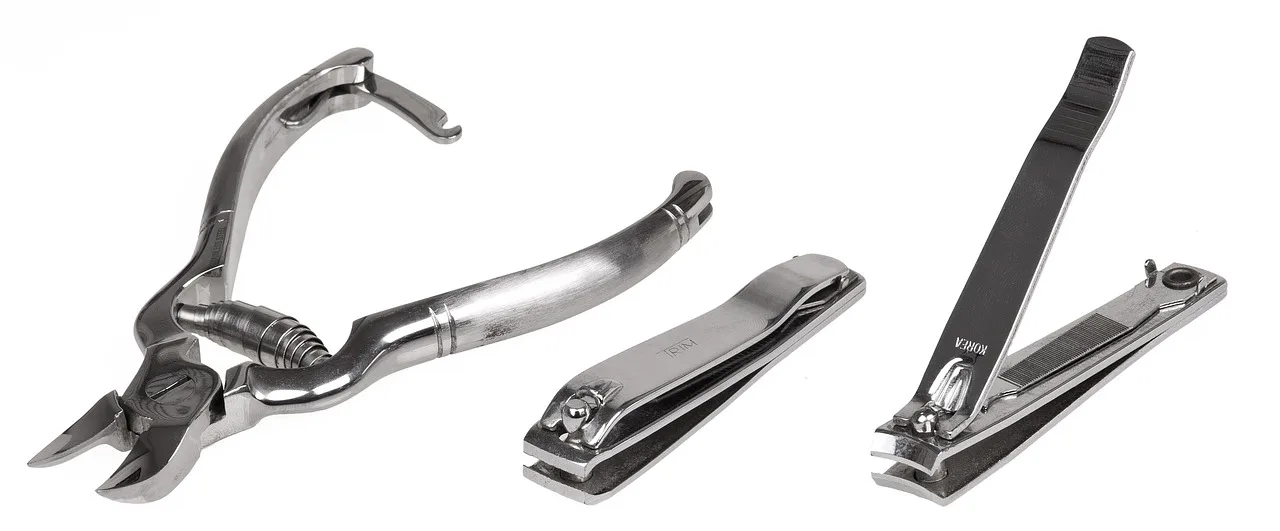
Reusable non-porous metal implements are cleaned of debris and then disinfected for the labeled contact time. Porous items are discarded after one client or given to that client, because a porous surface cannot be reliably disinfected. That covers files, buffers, wooden sticks, toe separators and pumice.
Call the labeled contact time T_contact and the seat-to-seat turnaround for the shortest service on the menu T_total.
Sets per technician must be at least 1 + ceiling(T_contact / T_total), so one set finishes its cycle while another is in use.
Owners who buy one set per technician meet this on the first busy Saturday. They shorten the contact time, which is the wrong variable to change.
Clean implements go into a covered, labeled container kept apart from the soiled container. Every station needs both, not one shared pair at the back.
The dispensary and the back of house
Products need one storage place with labels facing out, nothing decanted into an unlabeled container, and safety data sheets in a folder a substitute technician can find. Waste bins for solvent-soaked material need lids that close. Those obligations sit under a general employer duty, organized the way OSHA guidance on safety management describes.
Laundry, if towels are used, needs enough stock to run a day without borrowing from service. Retail display belongs where a client is already standing still, usually checkout.
Buying order, when the money is finite
| Priority | What it covers | Why it comes when it does |
|---|---|---|
| First | Source capture at every occupied station, lamps matched to the gel systems, enough implement sets to rotate | These make required practice possible |
| Second | Task lighting, technician seating, the client chair, covered storage | Output quality, and whether staff last the shift |
| Third | Pedicure units in the quantity the booked menu supports | Expensive, and easy to over-buy before demand is known |
| Fourth | Retail fixtures, front of house, anything cosmetic | Real value, but none of it makes a service possible |
Quantity depends on what is on the menu, which is why the equipment list and the service list are one decision. The services and packages guide works through the menu side, and the startup and market guide covers the funding side.
What equipment cannot do
It cannot make a service safe for a client who should not have one. If a client presents with a nail or skin condition, the service is declined, the decline is recorded without naming a condition, and the client is referred to a physician or podiatrist.
It cannot compress a labeled contact time. And it cannot fix a menu whose durations were never measured: good equipment on an inaccurate calendar still runs late.
Common questions
Is a downdraft table worth it over a portable source capture unit?
Both capture at the source, which is the property that matters. The differences are intake position relative to the hand, noise, filter cost and whether the unit moves.
How often should extraction filters be changed?
On run hours, following the manufacturer's guidance, with the hours actually recorded. A calendar interval over-serves a quiet station and under-serves a busy one.
Can one lamp serve several gel systems?
Only where every manufacturer involved says so. Treat any mismatch as a cause of service breakdown rather than as a technician problem.
What is the most common over-purchase?
Pedicure units bought for a peak that has not arrived. They take floor area, and each one adds a between-client procedure that has to be staffed.