Guides
Nail salon market trends worth planning around for 2027
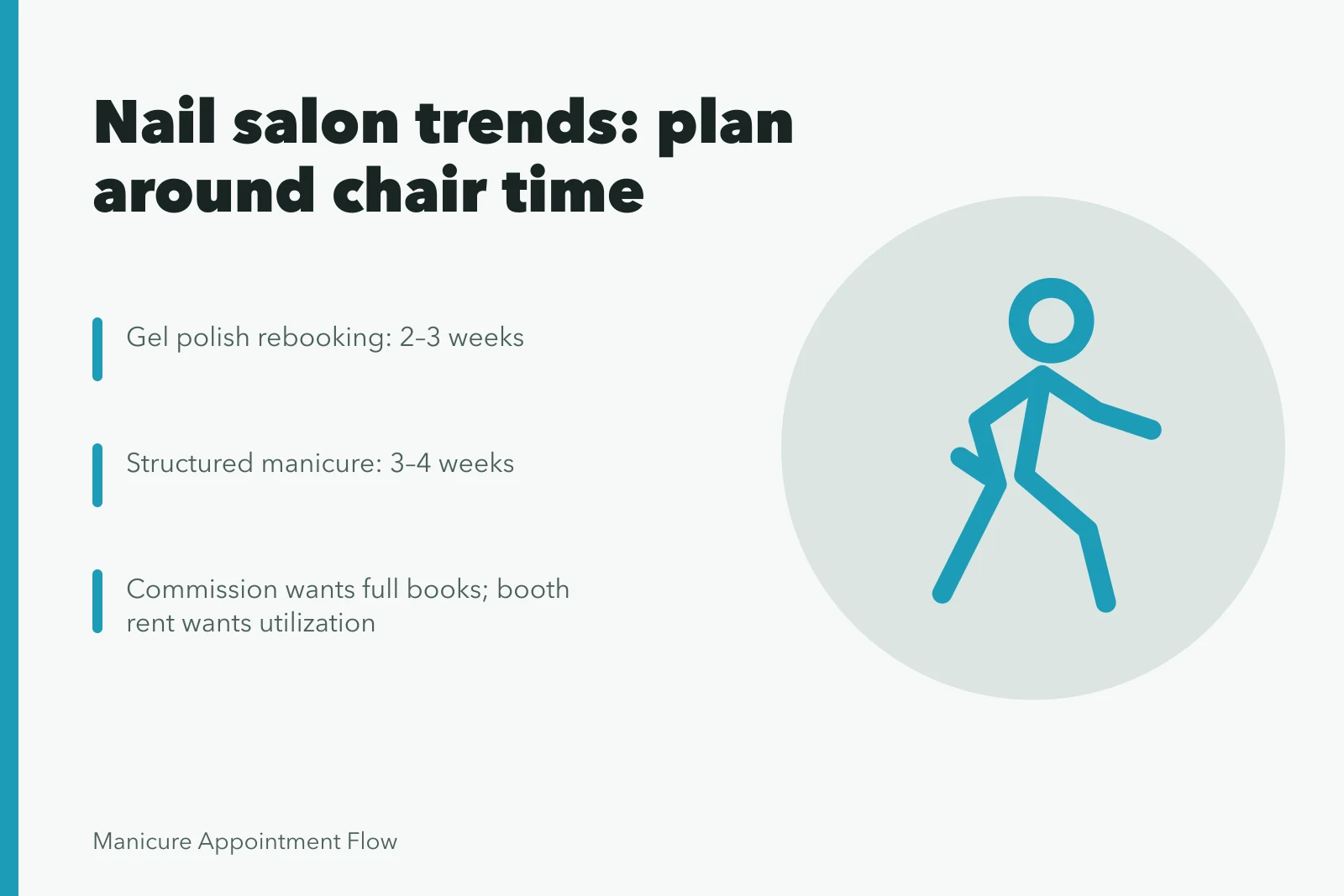
Nail salon trends for 2027 only matter if they change chair time, service mix, technician pay model or rebooking cadence, so plan around the clock, not the hype.
What to take away
- A trend is worth acting on only when it changes chair time, service mix, or how technicians get paid.
- Chair time is the unit. A service that runs long costs you the slot behind it, not just the minutes.
- Pay model sets scheduling: commission wants a full book, booth rent wants the room used, hourly wants the shift covered.
- Rebooking cadence is the retention number. Two to three weeks for gel, three to four for structured manicure, four or more for pedicure.
- No-show policy is a scheduling tool, not a punishment. Write it once and apply it the same way to every client.
Read the trend through chair time
Every trend arrives as a service someone wants. The question is what it does to the clock.
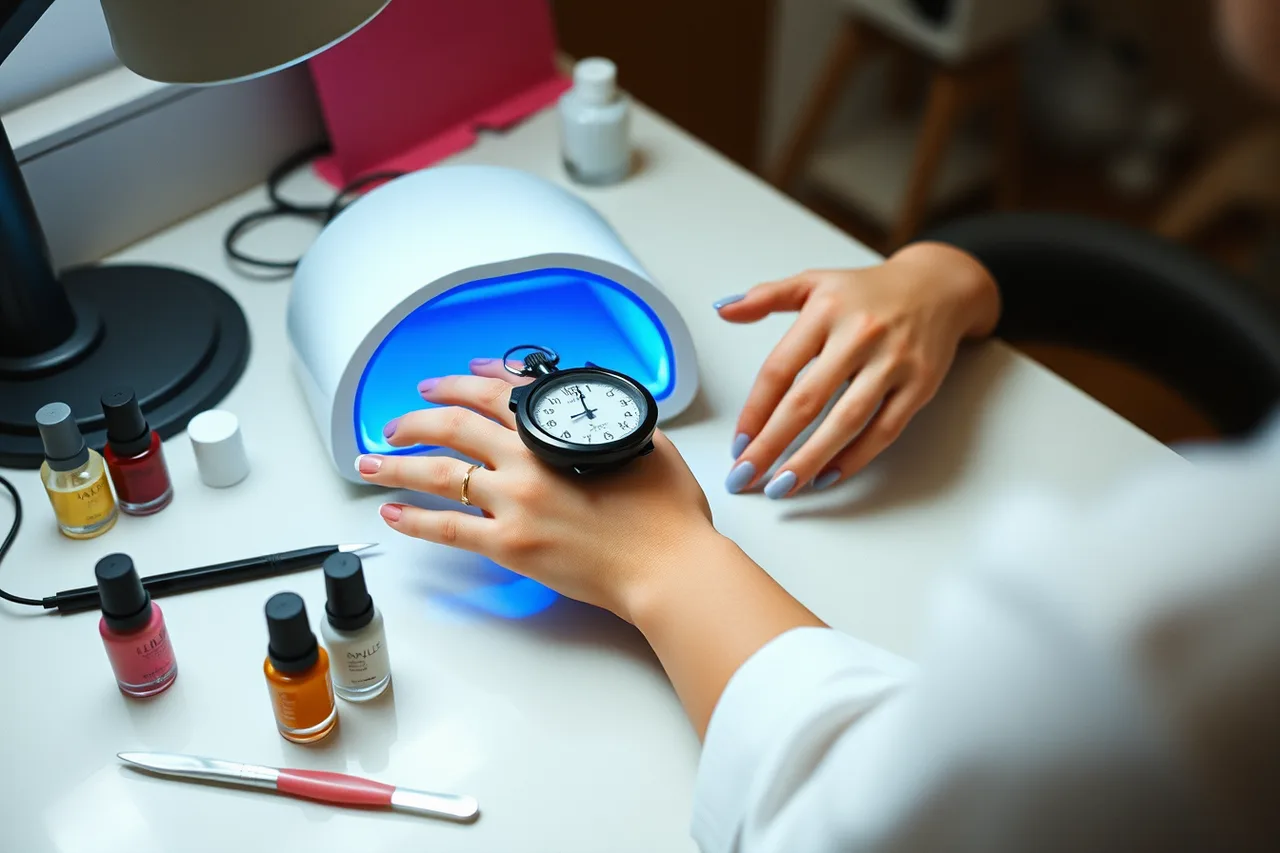
Time each service on your own floor, not a supplier sheet. Natural nail care holds a chair for set minutes, while gel polish, builder gel, acrylic and structured manicure each hold chairs for different minutes, with removal, shaping, curing and cleanup included.
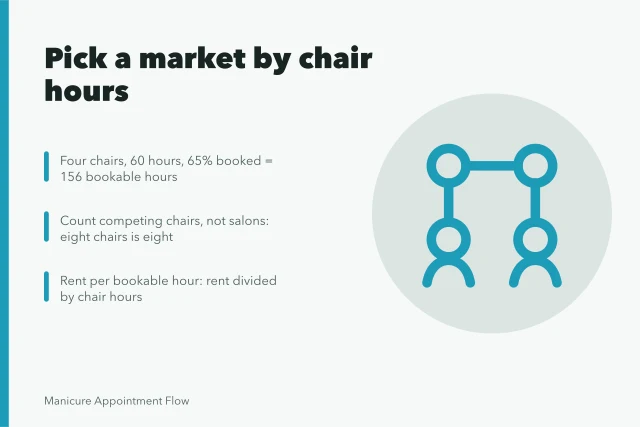
Capacity is open chairs times open hours, divided by the average service time. Raise average time and you cut capacity without touching the schedule.
A service that runs twenty minutes over is not twenty minutes. It is the next client waiting, or the last one rushed.
Where the money actually moves
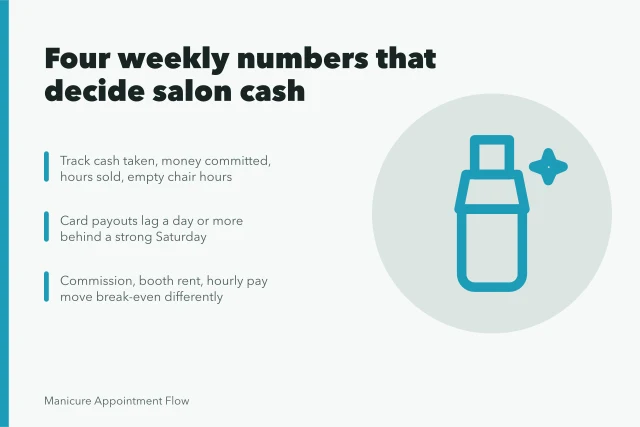
| Pay model | What it pushes the schedule toward | Where it breaks |
|---|---|---|
| Commission | Full books, fast turnaround, add-ons | Rushed services when the book is tight |
| Booth rent | High chair utilization, longer hours | Rent due whether or not the chair is filled |
| Hourly | Covered shifts, steady pace | Slow shifts cost the same as busy ones |
The pay model decides which trends you can adopt. A commission floor absorbs a longer service because the technician earns on it.
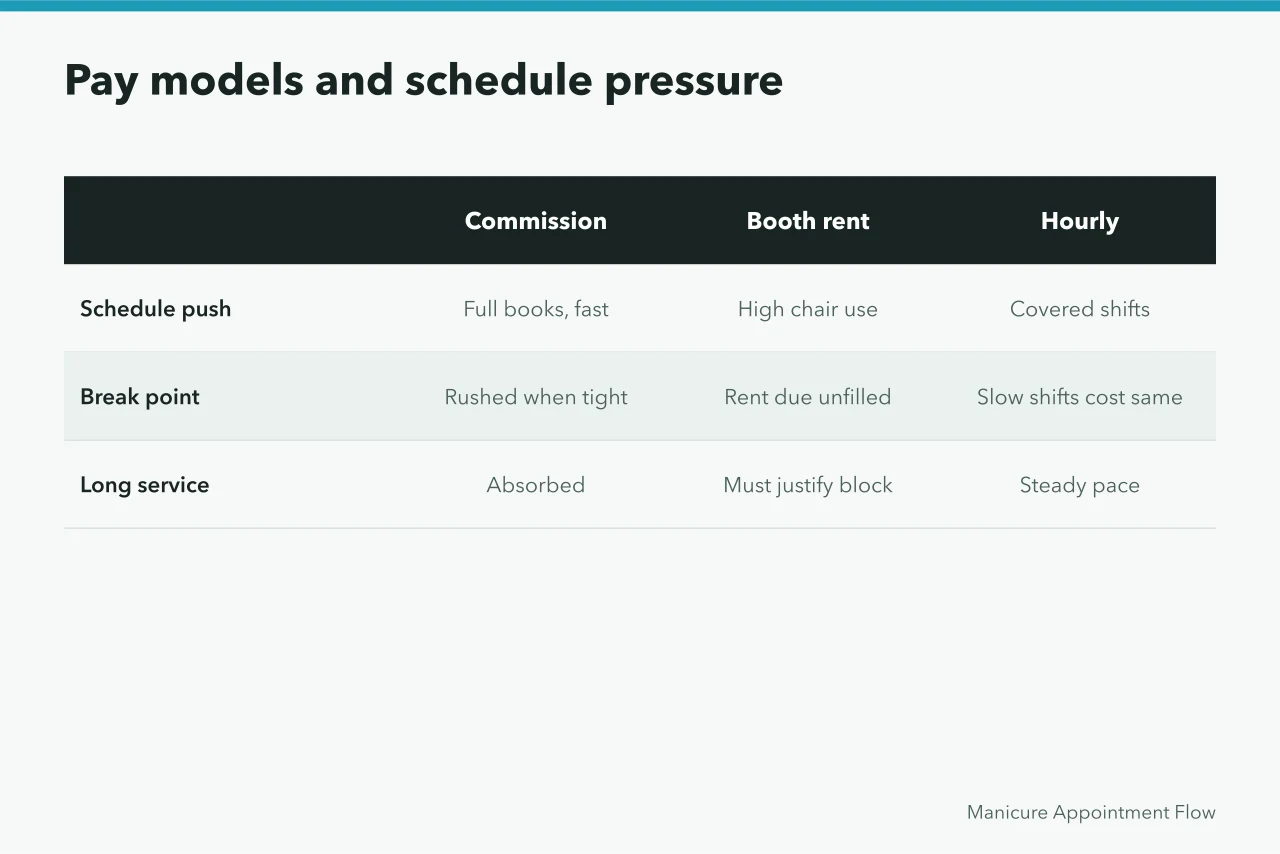
A booth renter pays for the room, so a service that blocks a chair for two hours must justify the block. Neither is wrong. Mixing the two without writing down which is which is how scheduling arguments start.
Service mix and rebooking
Rebooking cadence is set by how the product wears, not by what the client prefers. Gel polish and builder gel typically come back in two to three weeks. Structured manicure holds three to four. Acrylic fills run two to three. Pedicures run four weeks or longer.
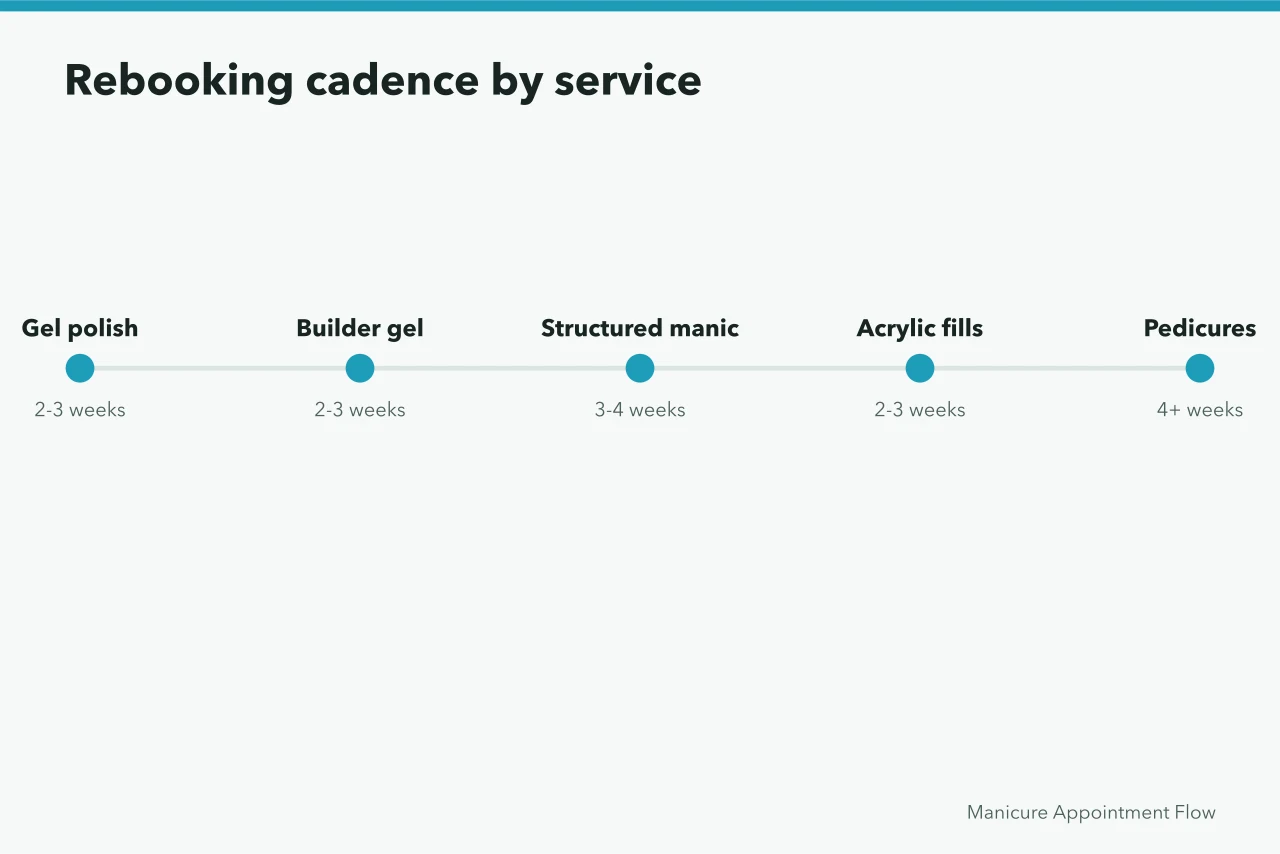
Track the gap between visits per service. If gel clients are drifting to five weeks, either your adhesion is failing or your rebooking ask is weak. Both show up in the same number. Owners who track that gap can compare their numbers against the nail salon service packages that match return visits to real service times.
Walk-ins and booked clients compete for the same chair. A walk-in policy that fills gaps is worth keeping. One that breaks a booked appointment is not.
Adhesion, lifting and what you record
Lifting is the most common complaint and the hardest to attribute. Record the product, the prep steps, the client's home routine and the days until failure. That record tells you whether the problem is prep, product or aftercare.
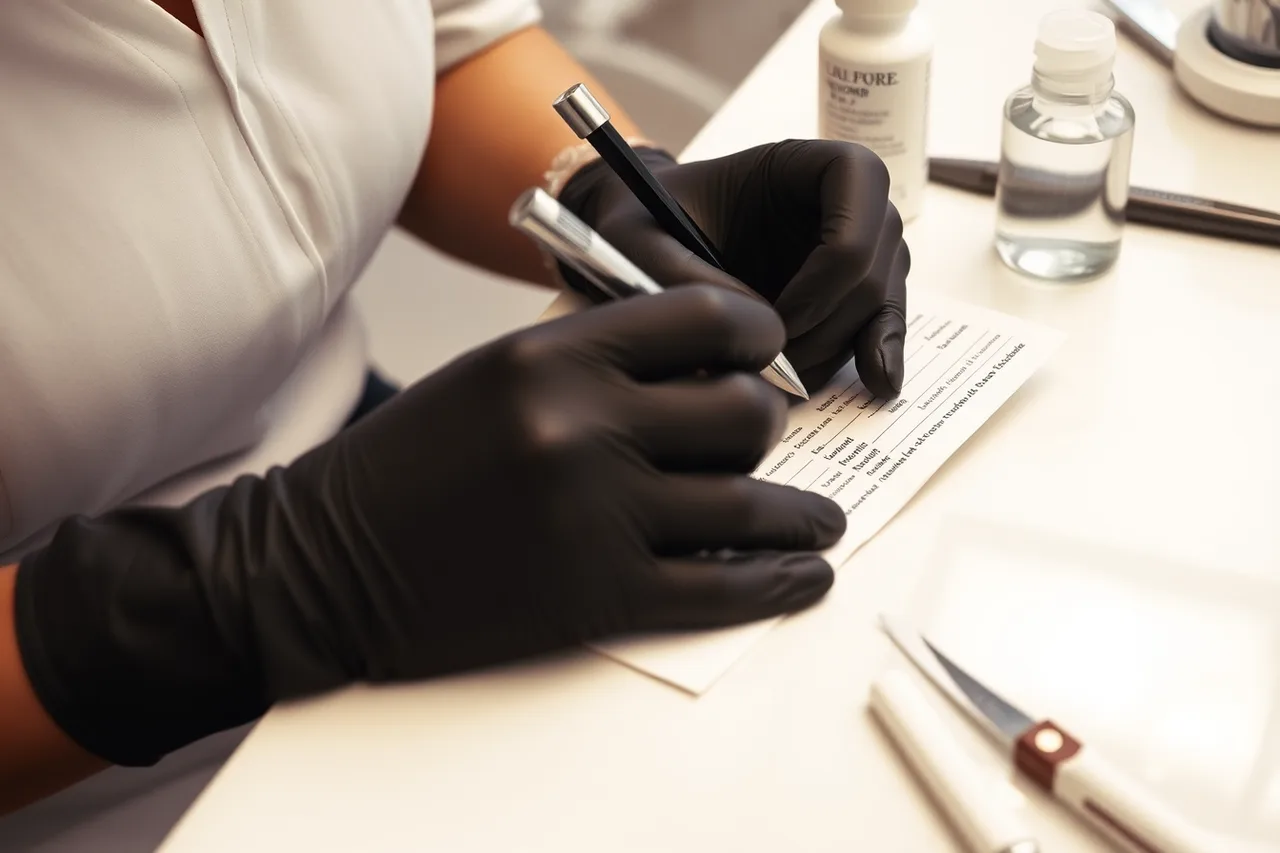
Where a client presents with a nail or skin condition, the salon does not diagnose or treat it. Record what you observed, decline the service, and refer the client to a physician or podiatrist. Write that procedure down so any technician applies it the same way.
Disinfection, single-use versus reusable implements, pedicure basin cleaning between clients and table ventilation are all set by your state board of cosmetology. Confirm the current rule with your state board rather than following another salon. Your state board rule also sets what a nail salon compliance checklist must show for each station.
What to check before you commit
- Time each service on your own floor for two weeks and average it.
- Recalculate capacity with the new average.
- Pull the visit gap per service from your booking records.
- Write the no-show and late policy, and apply it once before changing it.
- Confirm the pay model in writing for every person in the space.
- Check the current sanitation and ventilation rule with your state board.
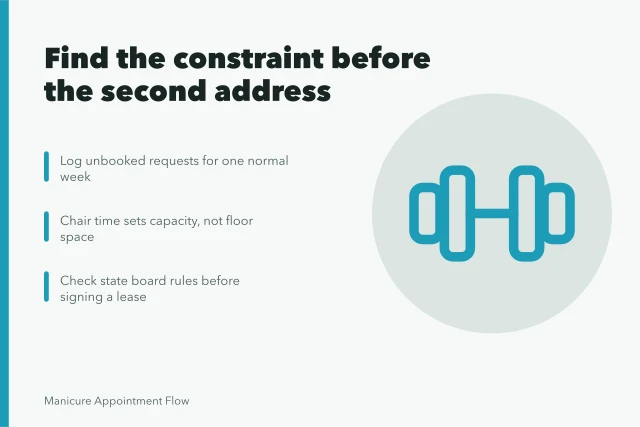
The SBA business guide covers market research, startup costs and hiring for owners working through expansion. The BLS occupational outlook for manicurists and pedicurists describes the work itself, including consultation, sanitation and licensing. Owners weighing a second location should find the real constraint before signing, and the nail salon expansion planning guide walks through that order.
Common questions
How do I know if a trend is worth adopting?
Time it on your floor for two weeks and see what it does to capacity. If the chair time fits your book and your pay model supports it, test it on a limited number of slots first.
Should I raise prices or cut service time?
Cut the wasted minutes first. Removal, setup and cleanup are where time disappears, and those minutes cost you nothing to remove.
How often should I review the service menu?
Every quarter, or whenever a technician's average service time moves. The menu and the schedule are the same document seen from two sides.
What do I do about a client with a nail condition?
Record what you saw, decline the service, and refer the client to a physician or podiatrist. Confirm your state board's rule on what the salon must document.