Guides
Nail Salon Walk-In vs Appointment Policy: What US and Canadian Salons Should Set
Compare walk-in and appointment policies for US and Canadian nail salons, including queue rules, deposits, no-show terms and cross-border client handling.
What to take away
- Walk-in policies serve impulse clients and fill gaps, but they need a live queue and flexible staffing.
- Appointment policies give predictable revenue and lower no-show risk when deposits and reminders support them.
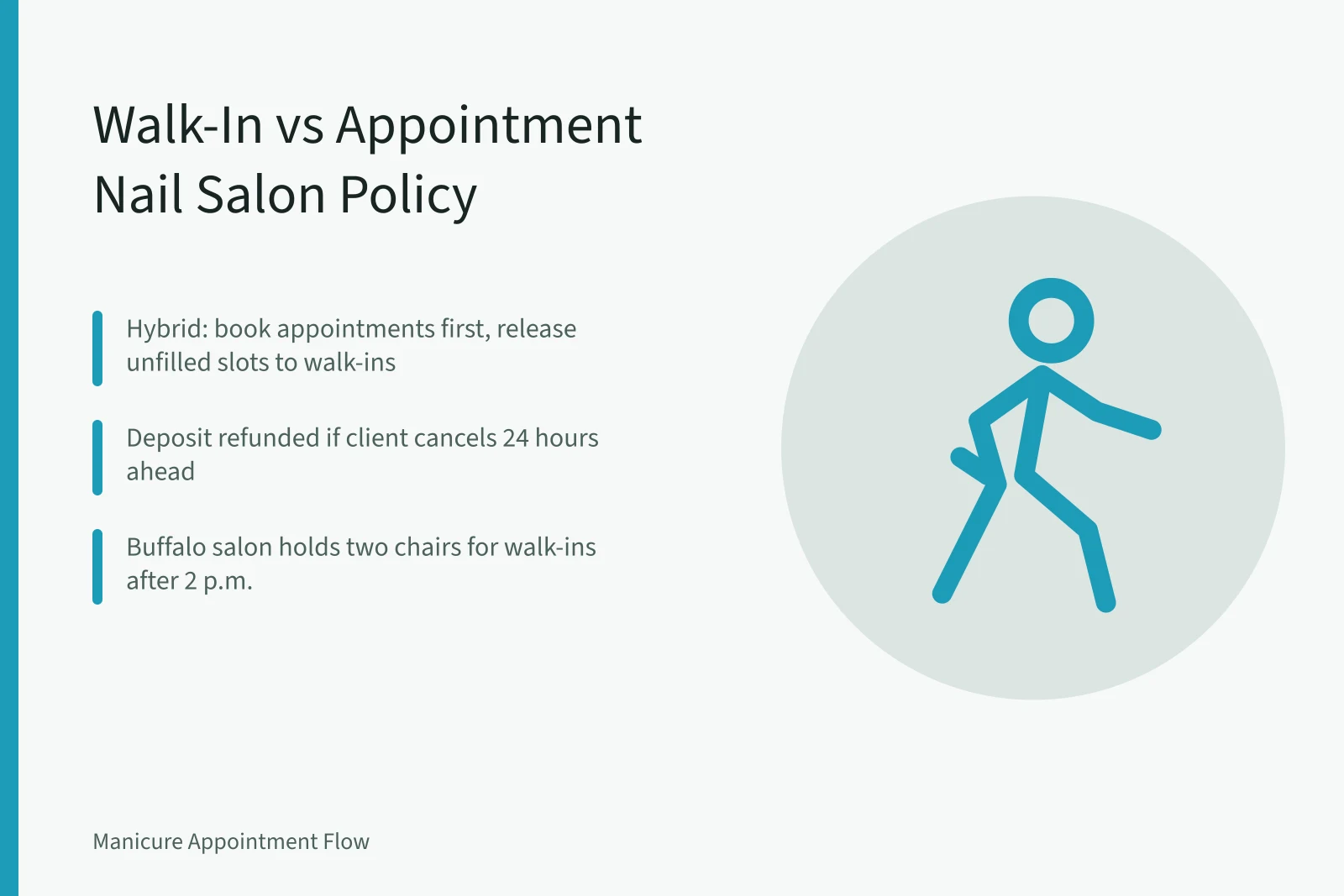
- A hybrid policy books appointments first and releases unfilled slots to walk-ins at set times.
- Every policy needs written deposit, late, and no-show rules posted before the client sits down.
- Canadian border salons need separate booking rules for American clients who cross for price and convenience.
Walk-In vs Appointment: Core Trade-Offs
A walk-in policy turns your chair into a first-come, first-served resource. Revenue depends on foot traffic and how fast each service runs. An appointment policy reserves time for named clients. That raises predictability but creates empty slots when someone cancels late. Neither model wins everywhere. The choice follows your location, staff size, and service menu.
Walk-In vs Appointment Policy
Walk-in policy
- Staffing
- On-call technicians
- Revenue
- Daily traffic
- Client type
- Spontaneous, local
- No-show risk
- Low, present
- Queue need
- Essential
Appointment policy
- Staffing
- Scheduled per booking
- Revenue
- Booked hours
- Client type
- Planner, repeat
- No-show risk
- Higher without deposit
- Queue need
- Optional fill-in
Walk-In vs Appointment
Walk-in policy
- Staffing
- Needs on-call technicians
- Revenue
- Tied to daily traffic
- Client type
- Spontaneous, local
- No-show risk
- Low, client is present
- Queue need
- Essential
Appointment policy
- Staffing
- Scheduled per booking
- Revenue
- Tied to booked hours
- Client type
- Planner, repeat
- No-show risk
- Higher without deposit
- Queue need
- Optional fill-in
Location matters. A mall salon near transit may run mostly walk-in. A home studio or medical pedicure practice usually runs appointment only. Federal and state rules do not force one model. Licensing rules cover sanitation and technician credentials, not booking format.
Queue Rules for Walk-In Salons
A walk-in queue fails when nobody owns it. Use a digital wait list or a paper log with time, name, service, and technician. Give each client an estimated start window, not a single time. Send a text when the chair is ready. Track actual wait times for two weeks to set honest promises.
Walk-In Queue Rules
- Post last walk-in acceptance time
- Cap queue before closing
- Offer call-back option
- Record queue no-shows
- Track actual wait times
- Post the last walk-in acceptance time on the door and online.
- Cap the queue at a number your team can clear before closing.
- Offer a call-back option so clients can leave and return.
- Record no-shows from the queue and block repeat offenders.
A queue works best with a visible wait list. Clients who see progress wait longer. That is a scheduling principle, not a guess: Scheduling covers how service businesses match capacity to demand.
Deposit and No-Show Rules
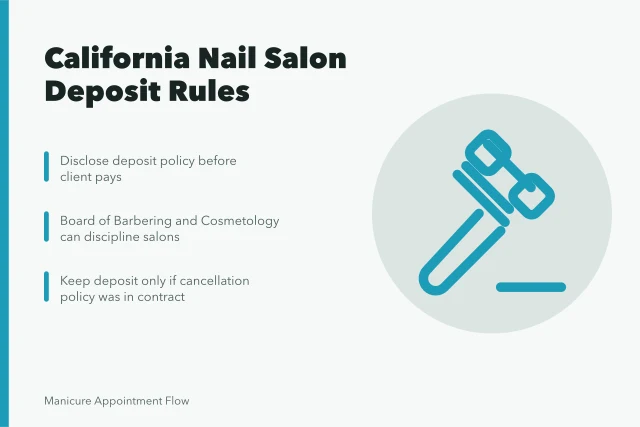
Deposits protect appointment time. A no-show is a client who books and never arrives, a common problem across service businesses. No-show explains how deposits and fees reduce that risk.
Set a clear amount, a cancellation window, and a refund promise. For example, require a deposit of one service price and refund it if the client cancels at least 24 hours ahead.
- Choose a deposit amount, such as a flat fee or a percentage.
- Set the cancellation window and the refund method.
- Train staff to state the rule at booking and before service.
- Record every no-show and deposit forfeiture in the booking system.
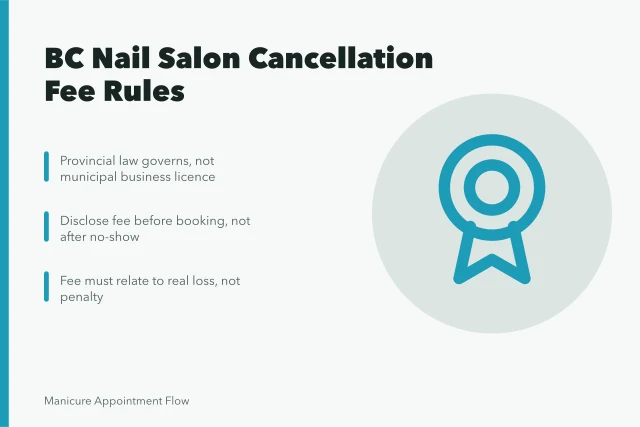
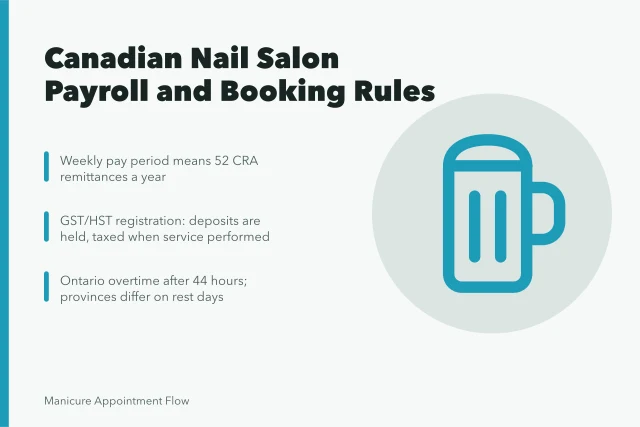
In Ontario, deposit rules must align with the Consumer Protection Act, 2002. Check Ontario laws for the current text.
Example: A Hybrid Policy in Practice
A 4-chair salon in Buffalo, New York sets appointments from 10 a.m. to 6 p.m. It holds two chairs for walk-ins after 2 p.m. Clients who call ahead join a digital queue. The salon texts when a chair opens. Deposits apply only to appointments longer than 45 minutes. Walk-ins pay in full at checkout.
A hybrid policy works when the appointment calendar and the walk-in queue share one screen. Staff should not juggle two paper systems.
Cross-Border Clients and Channel Choice
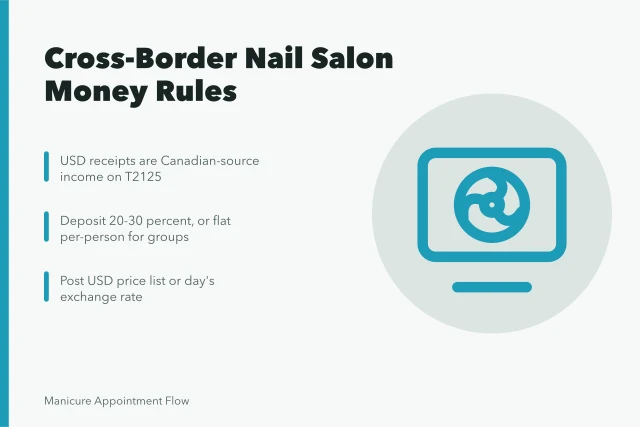
Canadian salons near the US border see American clients who book ahead for manicures. Those clients often compare price and travel time. Readers who serve them can see how border city nail salons in Canada price, deposit and report that work. A separate deposit rule for cross-border bookings reduces last-minute cancellations.
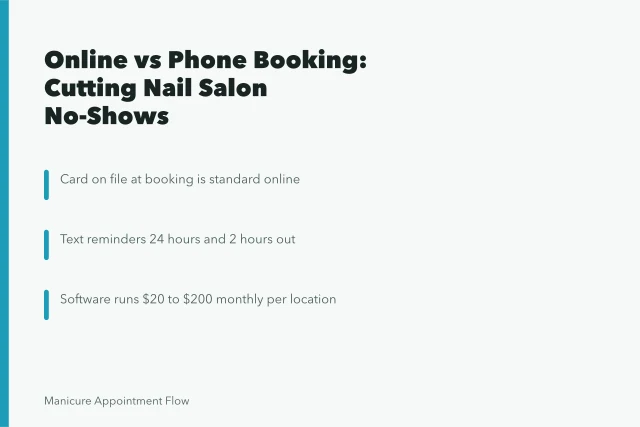
Booking channel also shapes no-show rates. Compare online booking vs phone booking to decide which channel reduces missed appointments. Online systems send automatic reminders. Phone booking allows negotiation but takes staff time. The right mix depends on client habits and software you already pay for.