Guides
Nail salon cash flow basics for owners who hate spreadsheets
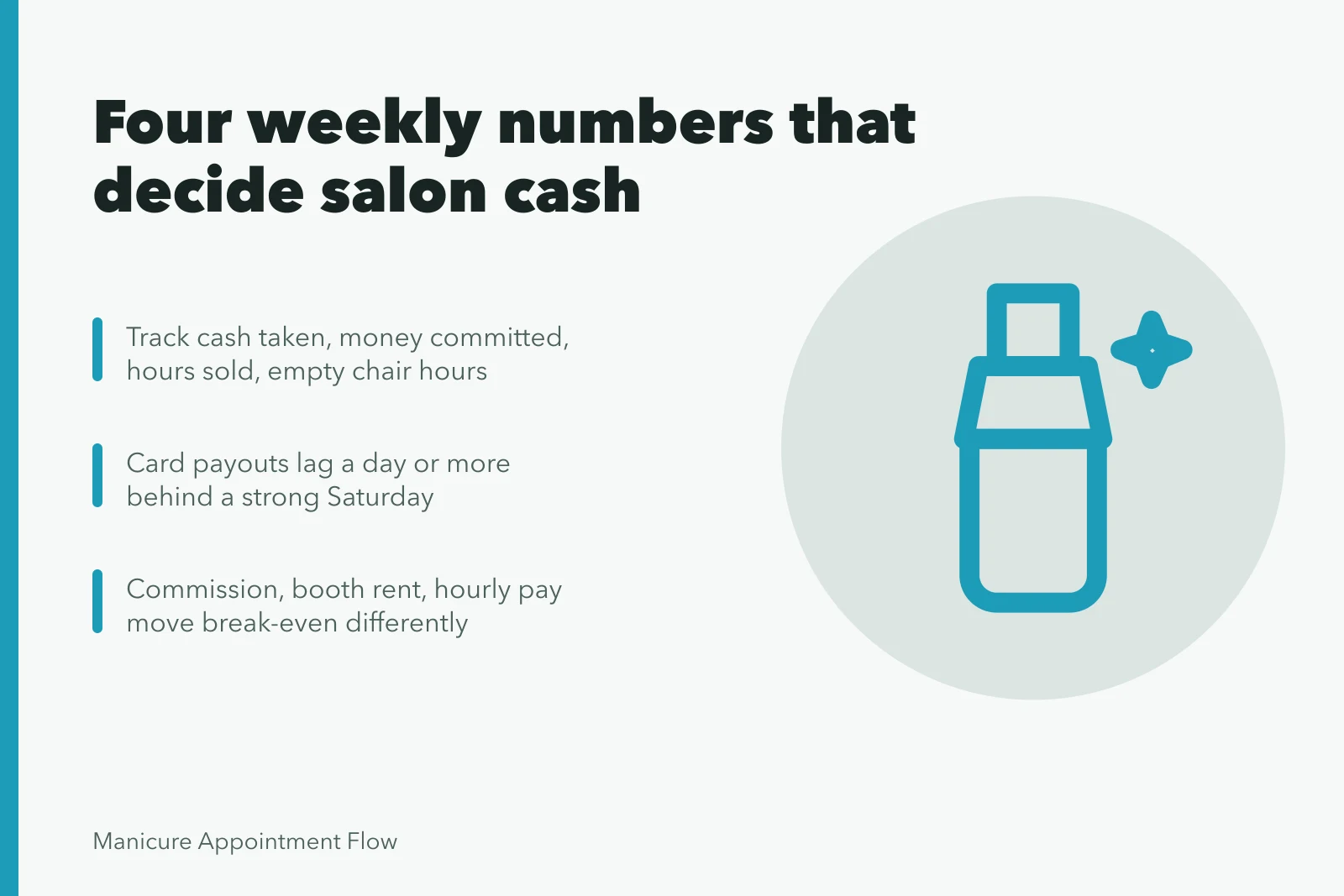
Nail salon cash flow hinges on four weekly numbers: cash taken, money already committed, hours sold, and hours the chair sat empty, not profit alone.
What to take away
- Cash and profit are different numbers. A full Saturday can leave the account thin if the week's card payouts have not landed and the supply order has.
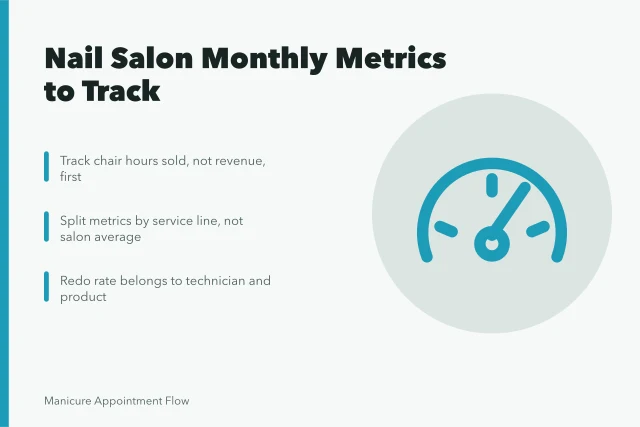
- Track four figures weekly: cash taken, money already committed, hours sold, and hours the chair sat empty. Everything else is commentary.
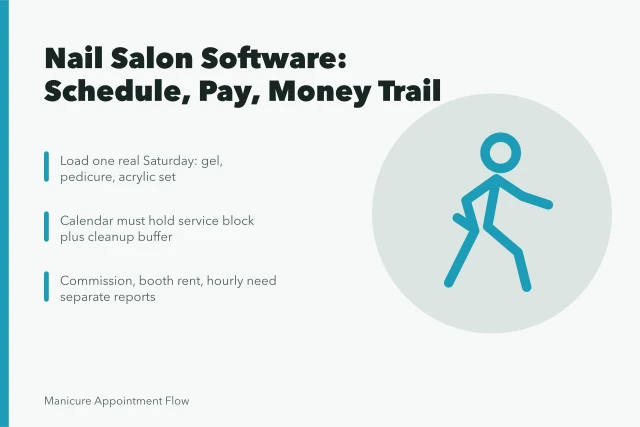
- Commission, booth rent and hourly pay each move the break-even point to a different place, and the schedule has to match the model you chose.
- Reconcile the drawer to the day's tickets before anyone goes home. A gap found the same night is a correction; a gap found in April is a mystery.
The four numbers that decide the month
Money in the drawer is not the same as money earned. Card processors hold funds for a day or more, so a strong Saturday can sit outside the account while the distributor's invoice clears. Watch the gap between the two, not either one alone.
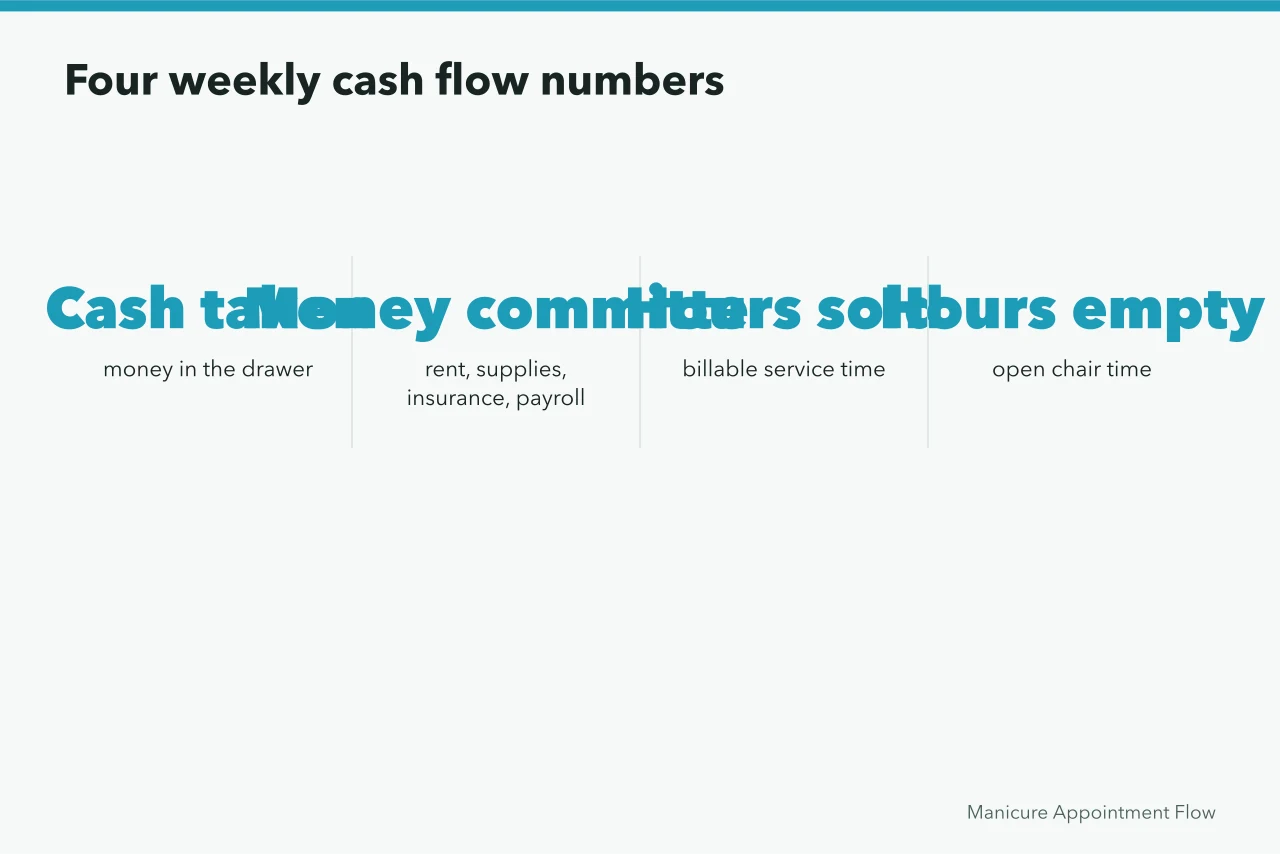
Money already committed is next month's rent, the supply order, insurance, and any payroll you have promised. Subtract it from what is actually in the account. What remains is what you can spend this week without borrowing from yourself.
Hours sold is the count of billable service time. Hours the chair sat empty is the rest of the open day. A technician at 70 percent booked is not a scheduling problem yet. At 50 percent, the fixed costs are eating the week, and the fix is either price, mix, or hours open.
Where the money goes, side by side
| Line | How it behaves | What to watch |
|---|---|---|
| Rent, insurance, software | Fixed. Due whether the chair is full or not | Signed in a good month, paid in a slow one |
| Product and single-use items | Rises with every client | Waste nobody counts, especially gel and tips |
| Technician pay | Follows the model, not the mood | Overtime in the two weeks before a holiday |
| Stations and equipment | Deferred easily, then all at once | A repair bill landing during a walk-in rush |
Commission, booth rent, or hourly
A commission technician costs you a share of each ticket and nothing when the chair is empty. That model rewards a full book and punishes a slow Tuesday, because you carry the rent either way.
A booth renter pays a flat amount and keeps the rest. Your income is predictable, and so is your ceiling. The renter's schedule is theirs, so the walk-in coverage you promised the neighborhood may not exist on their days off.
An hourly technician costs the same whether the client shows or not. That is the safest model for training a new hire and the most expensive model for a quiet week. Pick the model that matches the demand you can actually forecast, then build the schedule around it.
Reading the week before it ends
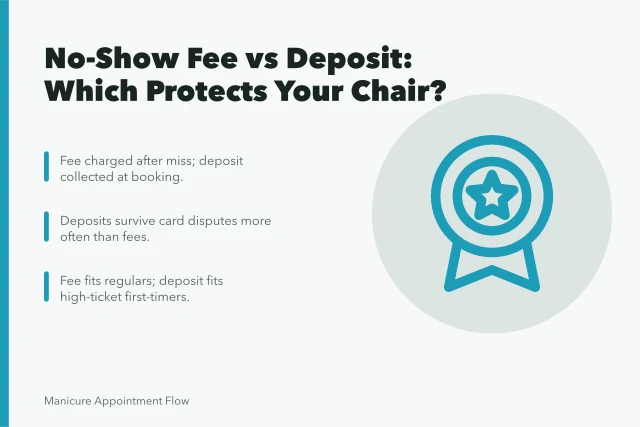
Count no-shows and late cancellations separately from walk-ins. A salon with heavy no-shows on gel and acrylic appointments is losing hours it cannot refill, and the deposit policy is the lever. A salon with heavy walk-ins on pedicure is losing the chance to book them forward.
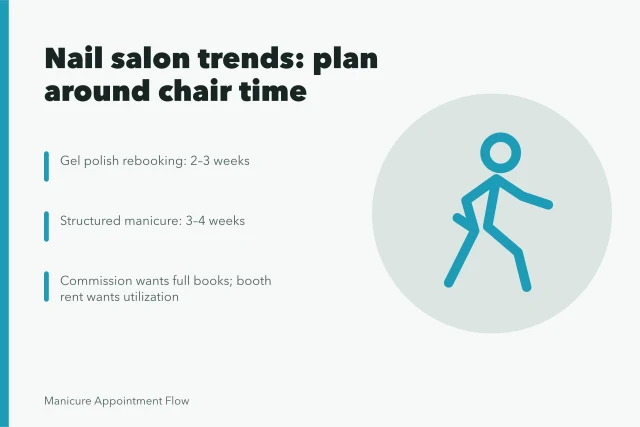
Rebooking cadence belongs in the same count. Gel polish returns in two to three weeks, acrylic and builder gel in two to four, natural nail care longer. If clients are not rebooking at the counter, the gap shows up as empty hours three weeks later, not this week.
The nail salon software and KPI guide covers which of these numbers a booking system can produce on its own and which you have to count by hand.
Records that survive a look
Keep daily close-out sheets, deposit slips, processor statements, and supplier invoices together, in date order. The IRS guidance on business records describes what a recordkeeping system has to show and how long supporting documents are normally kept.
If you take payments or hold client data on a tablet, the CISA small business guidance and the NIST quick-start guides are free starting points for protecting that data. Neither is specific to salons, and both are written for owners without a technical background.
Common questions
Should I pay myself a wage or take what is left?
A wage, even a small one. Taking the remainder teaches you nothing about whether the salon is profitable, and it hides a bad month until the account is empty.
How often should I reconcile the drawer?
Every close. Count the cash against the day's tickets, note any difference, and initial it. Weekly review of those notes catches a pattern before it becomes a habit.
Do I need accounting software to do this?
No. A weekly sheet with the four numbers and a folder of receipts will carry a single-chair salon. Add software when the counting takes longer than the decisions it informs.
What if a client has a nail or skin condition?
The salon does not diagnose it. Record what was observed, decline the service, and refer the client to a physician or podiatrist. Confirm the current rule with your state board.