
Guides
Nail salon compliance checklist: records by requester
A nail salon compliance checklist for grouping the records named here by requester, including board, local, tax, insurer, and landlord files.
What to take away
- Use this nail salon compliance checklist to sort records by who asks for them rather than by topic. The requester decides whether a document is acceptable.
- A document you cannot produce in five minutes is a document you do not have.
- Sanitation rules are state-specific. For example, Kentucky's 201 KAR 12:100 requires nonporous implements used on the public to be cleaned and disinfected before each use. Kentucky salons should confirm current requirements with the Kentucky Board of Cosmetology; elsewhere, check your own state board of cosmetology.
- This is a document organizer, not a state-by-state filing list. Confirm application names, fees, renewal dates, and deadlines with the agencies that apply to your location.
Confirm with the state board
- Establishment or salon license, current and displayed, with any notice the board requires posted.
- Practitioner license for every person performing services, verified through the board's lookup and dated, plus any manager credential the state requires.
- The written sanitation and disinfection procedure the salon actually follows.
- Disinfectants in use, labels legible, registration checkable against the EPA list of registered antimicrobial products.
- Completed sanitation logs in date order, including pedicure equipment and solution changes.
- The written decline-and-refer procedure that sends a client with a nail or skin condition to a physician or podiatrist.
Use the state board's official licensing page and lookup to verify which establishment and practitioner credentials apply, what must be posted, and whether a manager credential is required.
Asked for by the city or county
- Business registration for the trading entity.
- Zoning or use approval for a nail salon at this address.
- Certificate of occupancy, plus any plumbing or drainage sign-off for pedicure equipment.
- Fire and life safety sign-off, with exits kept clear in practice and not only on a plan.
Confirm these with the local planning or building office before the build-out; zoning or use approval, occupancy, plumbing or drainage, and fire or life-safety sign-offs may come from different offices.
Asked for by tax and employment authorities
- Federal tax registration with the Internal Revenue Service (IRS), plus state and local registrations, sales tax if retail is sold, and payroll once anyone is employed.
- A documented position on worker classification for every person in the space, booth renters included.
- Signed agreements matching that position, reviewed by an adviser rather than copied.
- Employment postings displayed, and records kept in the form and for the period specified.
Classification is where this trade most often goes wrong: booth rent is normal, and the label on an agreement settles nothing.
Asked for by an insurer
- Policy documents and certificates, filed where a landlord or client can be sent one.
- The services actually performed and the equipment installed, matched against what the policy describes.
- The claims notification procedure, written down, with the deadline named.
- The loss prevention the policy assumes, usually the sanitation records the board already wants.
Keep the declarations page, certificates, and claims procedure together; verify any notification deadline in the policy and note the exact contact route.
Asked for by the landlord and by the building
- The lease, with the permitted-use clause read rather than skimmed.
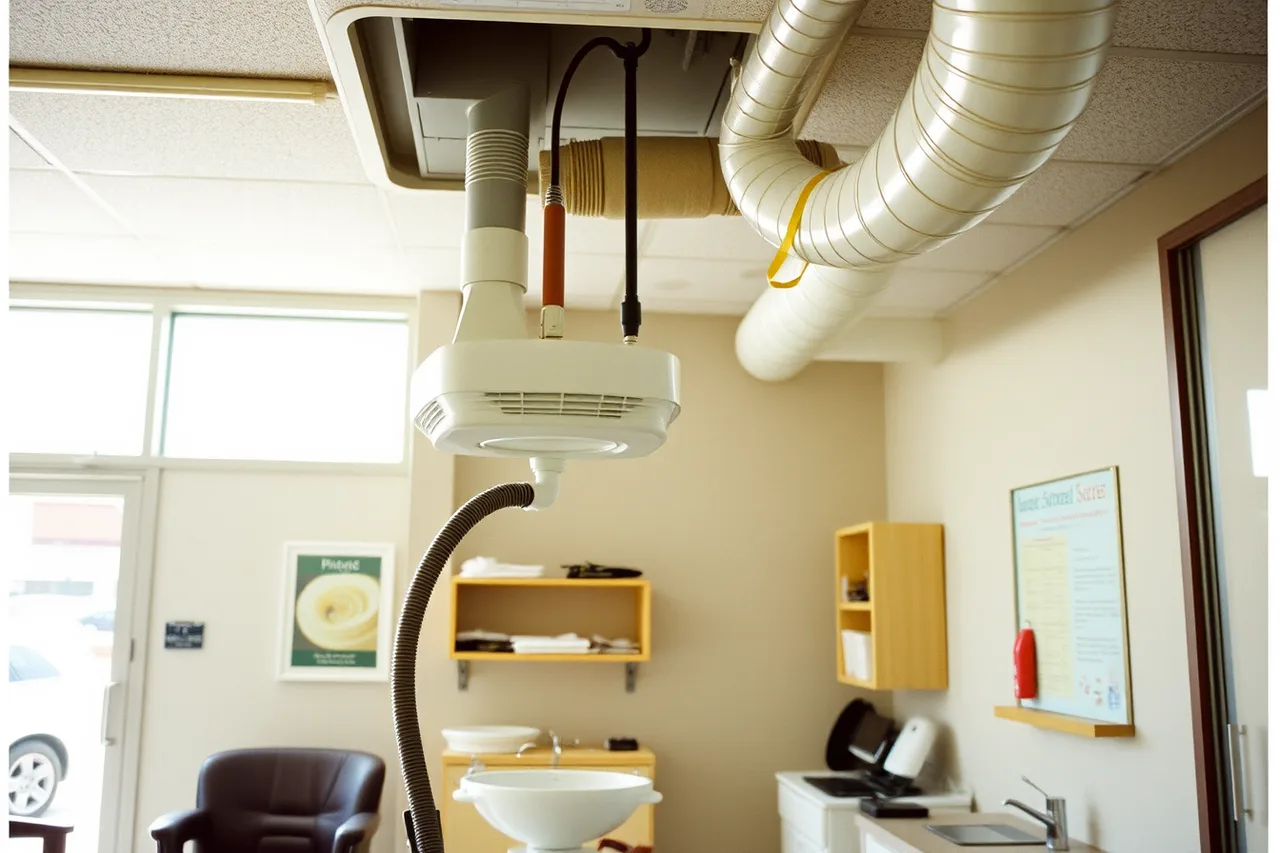
- Written approval for any alteration, especially ventilation, extraction and drainage, with contractor insurance certificates for the work.
- Whatever the building requires about hours, waste, deliveries or shared extraction.
Ventilation is the clause that surprises people: source capture and ducting touch the building fabric, so get the approval before installation.
Asked for by nobody, and needed anyway
- Required safety data sheets for each hazardous chemical, readily accessible to employees during each work shift under the OSHA Hazard Communication Standard (29 CFR 1910.1200); keep them in one place a substitute technician can find.
- One renewal calendar covering every license, registration, policy and lease date, with one named owner and a monthly date to check it against reality.
- Written answers received from the board, dated and filed.
- A contact sheet naming each applicable board, tax, workplace-safety, and local authority, plus the documents it requests.
Common questions
How long should compliance records be kept?
Use a record-by-record schedule: name the requester, the written requirement and its retention period, then confirm uncertain items directly. Do not apply one assumed period across licenses, tax records, employment records, and insurer files.
Digital file or paper file?
Both, with one of them authoritative. The failure mode is two half-complete files and no way to tell which is current.
What is the first thing to fix in an inherited salon?
Verify every practitioner license through the board's lookup, then read the lease's permitted-use clause. Those two produce the fastest unpleasant surprises.
Does a checklist protect against an inspection finding?
No. It reduces the findings that come from disorganization rather than practice, which is most of them.