Guides
Nail salon operations: chair time and flow
Nail salon operations depend on measured chair time, clean handoffs, effective sanitation, table-level ventilation and a deliberate booking mix.
What to take away
- Nail salon operations run on chair timeit is the only inventory a salon sells, and it expires every evening whether or not someone sat in it.
- A service is finished when the station is clean and the next client can be seated, not when the client stands up.
- Ventilation is an operating input, not a fixturesource capture at the table changes what a technician can do all day.
- Pay structure and booking policy are one decisionthe compensation model sets how much of the schedule an owner controls.
- Sanitation rules come from a state board of cosmetology and differ by state. Confirm the current text with the board that licenses you.
The unit that actually runs out
A salon does not run out of polish. It runs out of chair hours.
Take the hours the door is open, call that H_open, and multiply by the working stations S. That product is the ceiling on revenue, on technician earnings and on absorbed walk-ins.
Two things shrink it. Unsold time is the gaps nobody filled. Unsellable time is the clean-down after each service and the setup before the next. Owners attack the first and ignore the second, which is backwards: unsellable time is predictable and therefore designable.
Discounting does not create chair hours, and neither does a busier front desk. The pricing and profit guide works through what each hour must earn; this page is about how many exist.
Turnaround time, and how it sets the day
Turnaround is the seat-to-seat interval, and it has three parts.
Turnaround interval breakdown
- T_servicehands-on time with client
- T_cleanstation reset after service
- T_bufferabsorbs lateness or extra coat
T_service is hands-on time and varies by menu line; a polish change and a full acrylic set are not proportional to price.
T_clean is the station reset: implements to the soiled bin, table wiped, single-use items discarded, fresh setup laid out. T_buffer absorbs a late client or a set needing one more coat.
Chair capacity for a service is H_open / (T_service + T_clean + T_buffer).
T_clean is charged to the salon, not the client. So a menu of short services carries more unsellable time, proportionally, than a menu of long ones.
Booking software set to the hands-on figure overbooks every technician daily. It schedules T_service while the room runs the whole interval. Measure your own three components per service, on real days, before trusting a template default.
Which services deserve their chair time is a menu question, and the services and packages guide takes it apart line by line.
The clean-down that sits between two clients
Reusable metal implements, meaning nippers, pushers and metal files, are cleaned of visible debris and then disinfected with a product labeled for that use. EPA's Pesticide Product Label System (PPLS) lets owners look up product labels, including labeled contact times. An implement lifted out early has been rinsed, not disinfected.
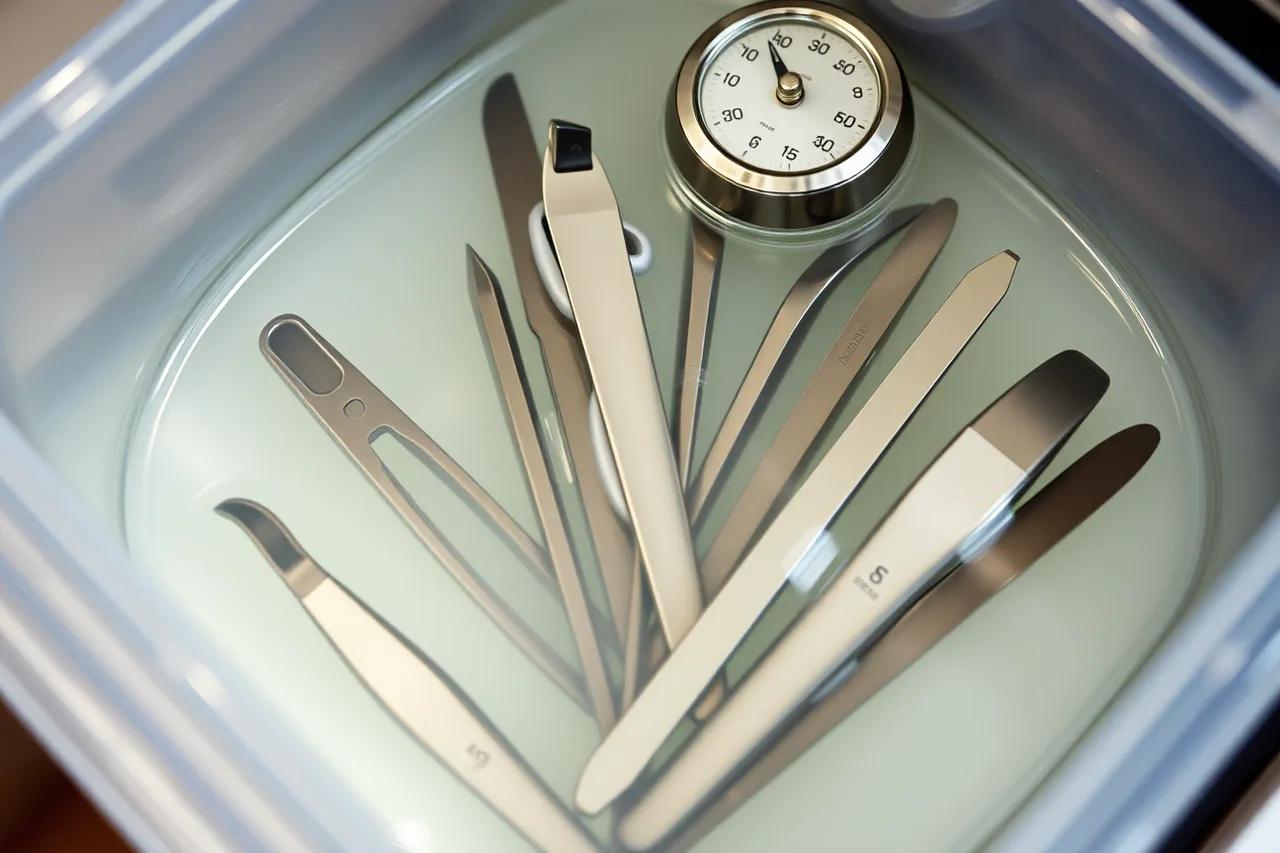
Porous items are the other population, and in most states they are not disinfected at all. Abrasive files, buffers, wooden sticks and toe separators go to that client or into the bin after one use. A porous surface cannot be reliably disinfected, which tells you where a new item belongs when a supplier is vague.
Pedicure basins need their own procedure: drained, cleaned with detergent, disinfected for the labeled contact time, drained again. A pipeless impeller comes out and is cleaned as a part; a piped system circulates water through lines nobody can inspect. A liner does not replace the procedure unless your board says it does, and most do not.
Log basin cleaning and disinfectant changes with the date, the time and the initials. Keep the log even where your board does not ask for one: an inspection is a documentation exercise, and memory is not a document. Sanitation requirements are state-specific, so check the current rules with the state cosmetology board or equivalent licensing agency that licenses the salon; there is no single U.S. state rule that applies to every salon. The licensing and compliance guide offers related detail, but verify the governing text with that agency.
Air at the table, not air in the room
Acrylic filing produces dust at the fingertip and monomer produces vapor at the same place, a short distance from a technician's face, for the length of a working day.
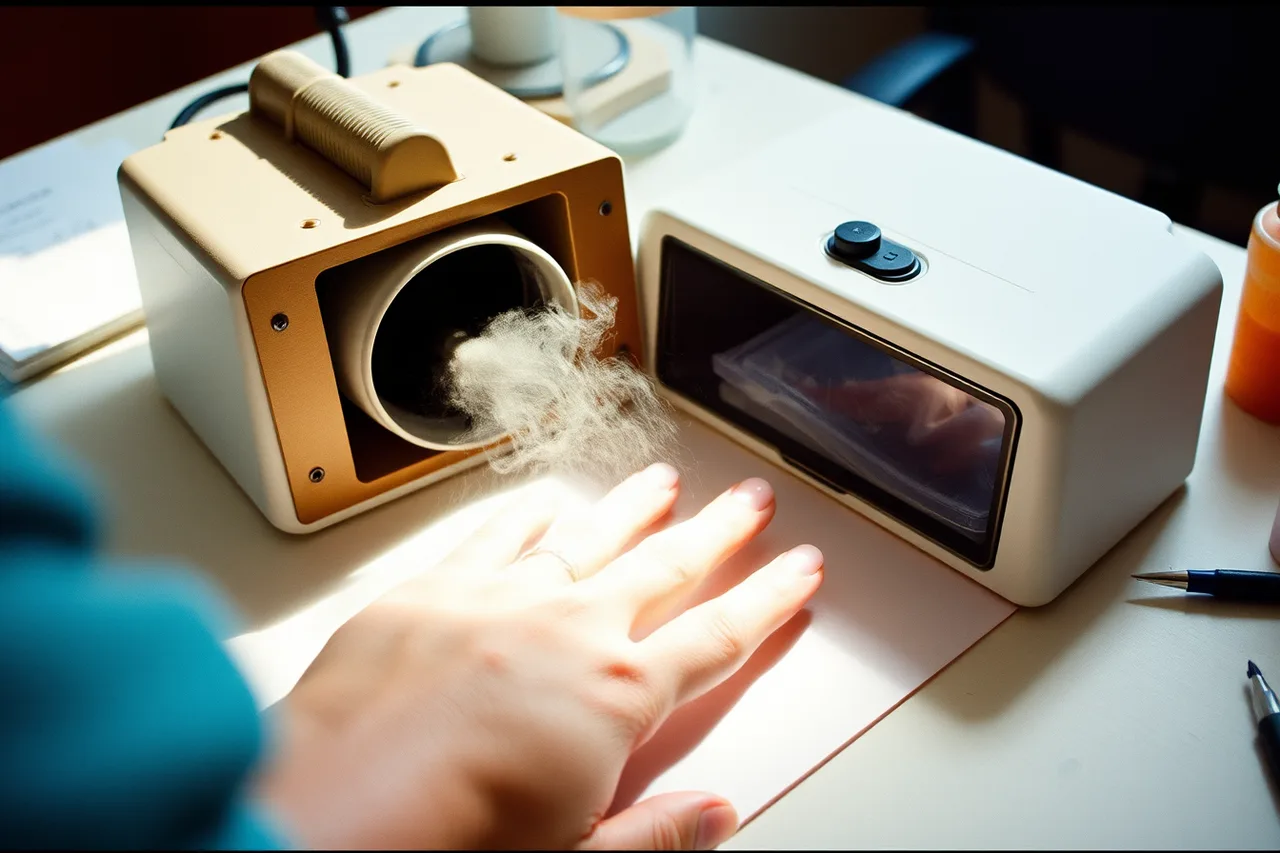
A room air cleaner in the corner treats the room average, downstream of the person you are protecting. Source capture through local exhaust ventilation (LEV)—a vent built into the table or a portable intake positioned at the working surface—treats air where it is made.
A filter is consumed by run hours rather than calendar months, so the change schedule should track hours. A particulate stage does nothing about vapor unless the unit carries a stage rated for that too.
Solvent-soaked wipes go into a bin with a lid that closes, and safety data sheets belong in one place a substitute technician can find. OSHA's Hazard Communication standard addresses workplace chemical hazards and safety data sheets; OSHA's Ventilation standard is relevant to ventilation where it applies. The OSHA guidance on safety management can help structure a safety process. Layout and unit selection are in the nail salon equipment and setup guide.
Booked work against walk-in work
Most salons run a mix without deciding the mix on purpose.
Booking policy trade-offs
Policy
- Fully booked
- Predictable turnaround
- Fully open
- Every walk-in
- Reserved share
- Both, at a cost
- Cancellation gaps
- Utilization on bad days
Protects
- Fully booked
- Passing trade
- Fully open
- Technician utilization
- Reserved share
- Held chair hours
- Cancellation gaps
- Nothing structural
Costs
- Fully booked
- Fully open
- Reserved share
- Cancellation gaps
What it protects
- Fully booked, no walk-ins
- Predictable turnaround and pre-set staffing
- Fully open, no appointments
- Every body that walks in
- Reserved walk-in share per shift
- Both, at a stated cost
- Walk-ins into cancellation gaps only
- Utilization on a bad day
What it costs
- Fully booked, no walk-ins
- Passing trade that arrives at the door
- Fully open, no appointments
- Any control over technician utilization
- Reserved walk-in share per shift
- A named block of chair hours held back
- Walk-ins into cancellation gaps only
- Nothing structural
Where it fails
- Fully booked, no walk-ins
- Quiet weekday afternoons stay empty
- Fully open, no appointments
- Long services block the room at the busiest hour
- Reserved walk-in share per shift
- The front desk must hold the line under pressure
- Walk-ins into cancellation gaps only
- Depends on a maintained cancellation list
Design the reserved share first, because it is the only policy that states its own price. Decide what fraction of chair hours a shift holds open, then check at month end how many sold. Held hours that sat empty mean the share was too high; walk-ins turned away while they filled instantly mean it was too low.
No-show policy belongs in the same design. Write down the grace window, the point at which a late arrival stops being a shortened service, and whether a deposit applies to long enhancement sets. Disclose all of it at booking, because a term produced only at checkout reads as a penalty.
Who owns each handoff
The failures that look like scheduling failures are usually handoff failures. Name an owner for each of these, by role rather than by person.
Handoff owners by role
- Intakeconfirm booking and sensitivities
- Seatingpick station and technician
- Scope changeflag before work starts
- Release and rebookingask at chair
- Resetreturn station to seatable state
- End of dayclose out disinfectant and logs
- Booking to arrival — front-desk lead:Verify the booked service and its seat-to-seat schedule block, and flag any booking-policy terms the client needs to know.
- Check-in to service — front-desk lead and technician:Pass the intake notes and requested service to the technician; the technician confirms the agreed scope before starting.
- Service to station reset — technician and sanitation lead:The technician separates reusable implements from disposables; the sanitation lead owns cleaning, disinfection and the fresh setup.
- Pedicure basin to next client — basin sanitation lead:Complete the basin cleaning and disinfection procedure, follow the product's labeled contact time, and record the work.
- Delay to schedule — technician and front-desk lead:The technician flags an expected overrun promptly; the front-desk lead adjusts the schedule and communicates with affected clients.
- Checkout and close — checkout lead and closing lead:The checkout lead records rebooking details; the closing lead verifies the station and basin logs before the shift ends.
Rebooking cadence differs by service and belongs on the client record, not in a house rule. Note the last interval, note whether the work held, and set the next one from that.
What the schedule cannot absorb
A client who arrives with a nail or skin condition is not a scheduling problem. Nobody in a salon diagnoses anything. The service is declined, the decline is recorded factually without naming a condition, and the client is referred to a physician or a podiatrist. Writing that down in advance keeps a technician from improvising at the table.
A technician on booth rent is not a scheduling problem. A renter sets their own hours, prices, and product. An owner cannot lengthen their turnaround or reassign their walk-ins.
Employee or contractor status is decided by the facts under applicable tests, not by what the agreement is called. For federal tax purposes, the Internal Revenue Service's Form SS-8, Determination of Worker Status for Purposes of Federal Employment Taxes and Income Tax Withholding, lets a worker or business request a determination. Labor-law classification may use separate tests.
Chronic overrun on one service line is a menu or training problem the schedule merely makes visible: either the booked duration is wrong or the technician needs repetitions. Shortening the buffer fixes neither.
A room that is fully booked and still not covering its costs is a pricing question, traced back in the startup and market guide.
Common questions
Should the booking system hold the hands-on time or the seat-to-seat time?
Seat-to-seat. Hold only hands-on time and every service borrows its clean-down from the next appointment, so by mid-afternoon the room runs late for reasons nobody can point at.
Is a disposable pedicure liner enough on its own?
Usually not. Most boards treat a liner as an addition to the basin procedure, not a replacement. Ask your board for the current text, not the liner supplier.
How should a salon record a service it declined?
Date, service booked, that it was not performed, the observable reason in neutral terms, and that the client was advised to see a physician or podiatrist. Never a diagnosis.
Who should own the end-of-day close?
One named role per shift, from a written list, with initials on the log. Splitting it across whoever is still in the building is how disinfectant changes get skipped on the busiest nights.